
Buenos Aires Hostels Argentina Versión en EspañolPortugues La Rocca Hostel Buenos Aires
Share |
Home | Hostels in Buenos Aires Argentina | Hostels in Argentina | University Residences in Buenos Aires | Bed and Breakfast in Buenos Aires | Apartments in Buenos Aires
Lodging in Buenos Aires | Spanish Schools in Buenos Aires | Boca Juniors Tickets | Tango | Tourism | Information about Buenos Aires | What's New? | Discounts | Contact us | Site Map
     
  • This is the list of University Residences in Downtown. For the complete list of 29 University Residences in Buenos Aires Argentina click here.  
Downtown, Centro - Buenos Aires Neighbourhoods - Information and lodging
Buenos Aires Downtown is an area integrated by 3 nieghbouhoods: Montserrat, San Nicolás & Balvanera.
• Montserrat: named after Our Lady of Montserrates in Spain, was the aristocratic area of Buenos Aires until an epidemic of yellow fever drove the inhabitants to higher ground farther from the mosquito infested banks of the Riachuelo (“ugly little river” in Spanish). The elegant homes the rich left behind became known as “conventillos” as the mansions were partitioned off into one-room dwellings where wave after wave of Spanish and Italian immigrants lived in squalor. The area of Montserrat / San Telmo is rich in historical monuments. The most important are found in the Plaza de Mayo, named in honor of Argentina’s Independence Day, May 25, 1810.
The President works in the Casa Rosada (the Pink House), also known as Government House (the official Presidential living quarters are in the suburb of Olivos). Like the Cabildo (Argentina’s Independence Hall) and the Cathedral, the Casa Rosada was rebuilt many times .. Nothing remains of the original Royal Fort. The present structure was finished in 1896 but the pink color goes back at least to the time of President Sarmiento (legend says that whitewash was mixed with animal blood from the slaughter houses to obtain the building’s rosy hue).
The Pyramid in the center of the Plaza commemorates the Republic’s first year of liberty and for a long time was the only monument to an independent nation in South America. It was moved to the center of the Plaza in 1912.
The Mothers of Plaza de Mayo still march around the Pyramid on Thursdays, in memory of their children who vanished during Argentina’s Dirty War. A church has formed part of the plaza since 1593. Since then six more churches have replaced the first one. The present neo-classical National Cathedral was modeled after the Palais des Bourbons in Paris. In 1880, the body of the hero of Argentina’s independence, General San Martín, was brought back from France-where he died in exile- and now rests inside the cathedral.
Argentine colonists gathered under umbrellas on a rainy morning in May, 1810, in front of the Cabildo to declare their independence, not from Spain but from France after its invasion of Spain. On July 9, 1816, the Congress of Tucumán declared Argentina’s independence from Spain, thus giving Argentina two independence days. Most of the Cabildo’s vice royal structure has been demolished, but the interior patio can evoke memories o f Spanish rule. Montserrat is rich in national historical monuments: the Montserrat Church, Nuestra Señora del Rosario Basilica, the Santo Domingo Church as well as the Cabildo, Catedral Nacional, and Casa Rosada. The British tried twice to conquer Buenos Aires in 1806 and 1807 but the spirited citizens defended themselves by pouring boiling oil on the soldiers (the street La Defensa gets its name from their courageous defense). Twice defeated, the British left their regimental colors. You can see them in the Santo Domingo Church. The block between Alsina, Bolívar, Moreno and Perú is known as “La Manzana de las Luces” (block of lights) because from colonial times many Argentine intellectuals were educated there. The famous Colegio Nacional Buenos Aires (a public secondary school as elite as Boston Latin) was designed by the French architect Norbert Maillart and welcomed Albert Einstein in 1926. A Jesuit school existed on the site in 1675.

• Balvanera
The neighborhood of Balvanera is encompassed by the streets and avenues Córdoba, Díaz Vélez, Gallo, Sánchez de Bustamante, Loria, Independencia, Entre Ríos and Callao. Balvanera is famous for its many wholesale and retail businesses along the avenues Corrientes, Pueyrredón and the intersecting streets of Azcuénaga, Pasteur and Junín. Along Belgrano Avenue you will find many stores selling all different styles of furniture, old, new and collectible at very reasonable prices.
Plaza Miserere, also known as Plaza Once, contains the mausoleum of Argentina’s first president, Rivadavia. Because Plaza Once is the terminus for many buses and for the A subway line as well as the Sarmiento Railroad, it is a very heavily trafficked area. One beau tiful building is the historical “Aguas Argentinas”, well worth a photograph. It is located in the block of streets Córdoba, Río Bamba, Viamonte and Ayacucho.
On the northern edge are the important Buenos Aires universities: Ciencias Económicas on Córdoba; the private Catholic Universidad del Salvador on Callao and the Philosophy and Literature University on Independencia.
Other sights are Our Lady of Balvanera Church, the church that gives the neighborhood its name, and the Abasto Shopping Center.

• San Nicolás
Better known as “el centro,” is encompassed by the avenues Callao, Rivadavia, Eduardo Madero and Córdoba.
Stylistically, it is a mixed bag with modern office buildings and old mansions co-existing side by side. The Obelisco is to Buenos Aires what the Eiffel Tower is to Paris-an icon of the city. Sixty-seven meters high, it commemorates the fourth centennial of the foundation of Buenos Aires. The “City Porteña” (citizens of Buenos Aires are called Porteños, people of the port) is the financial the hub for banking, exchange houses and the stock market: Banco Central of the Argentine Republic, San Martín 275; Museo Mitre, San Martín, 336; Stock Market, 25 de Mayo, 359 La Plaza de la República is a reference point for tourists and residents where the 9 de Julio Avenue, Diagonal Norte (Av. Roque Saenz Peña) and Corrientes come together.
The Congress building was modeled on the Capitol Building in Washington, DC, and completed in 1906. The Teatro Colón, a seven story building, is a world class theater for opera, ballet and concerts at Libertad 621.


+ We recommend you read this article with more information and pictures of Buenos Aires Downtown.
 

University Residences in Downtown Buenos Aires Argentina | Lodging in Downtown

Residencias Universitarias La Casona El Graduado Residencia Estudiantil Complejo Las Musas (female) Residencia Universitaria Gusti
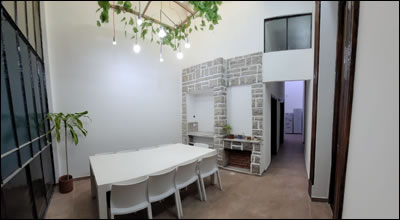
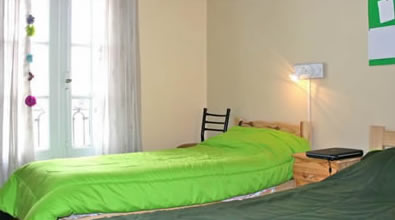
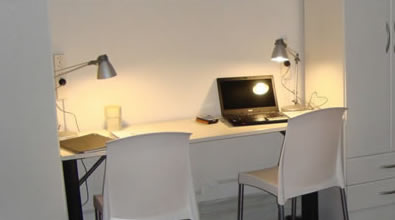
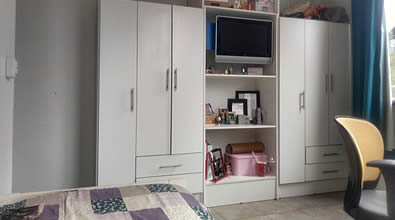
  Two big houses of 800 m2 each, with the purpose of giving temporary lodging for male students. We have designed the houses with confort & good taste.   Our rooms have plenty of natural light. They are fully furnished and get clean bed sheets every week. Wi-Fi and PC’s with Internet services are available for free.   Student housing for women in Buenos Aires, Argentina. Warmth of home with the service, luxury & comfort of an upscale hotel. Is new and only in its category.   The Residence offers rooms with sunny balconies, cable TV, private fridge and Internet access & WiFi in room, dining room with TV, DVD, laundry, daily maid service.  
Residencias Universitarias La Casona I y II en Buenos Aires Argentina El Graduado Residencia Estudiantil in Downtown Argentina Female University Residence Complejo Las Musas Residencia Universitaria Gusti in Downtown Argentina
Residencia Universitaria El Aromo Rooms deptos compartidos Residencia San Marcos R. Universitaria La Casa Del Girasol
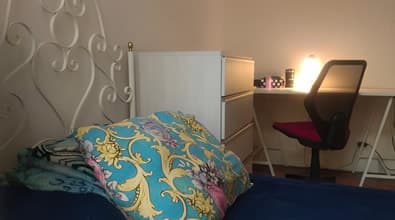
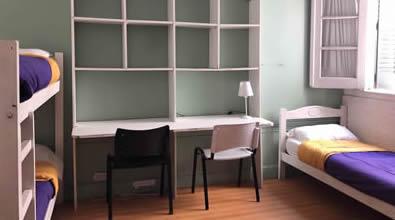
  Balance between convenience and price. All rooms have private bathrooms. For over 21 years studying and working. A large kitchen.   This is not a hostel or a university residence. Rooms are shared apartments only for university students, postgraduate, courses, young professionals, etc.   San Marcos Residence, close to the most important universities of Buenos Aires, is a university doorm based on the growth and the development of our hostess.   Mixed residence exclusively for Argentine and foreign students. Rooms equipped, kitchen, free WIFI, patio, trees and flowers. Style, design & tranquility.  
Residencias Universitarias El Aromo en Buenos Aires Argentina Residence in Monserrat Residencia San Marcos House in Monserrat Buenos Aires Argentina R. Universitaria La Casa Del Girasol
Residencia Esquina Porteña
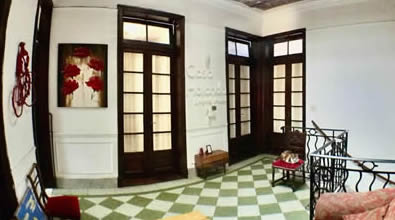
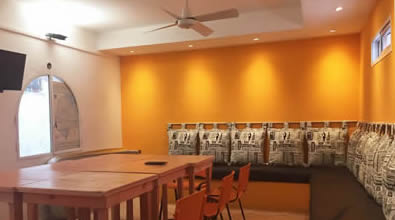
  It's a nice house, comfortable and with a particular style. Clean spaces, cheerful people like you! With quick access to universities and places of entertainment.   Para publicar su
Residencia Universitaria
haga click acá.
  Para publicar su
Residencia Universitaria
haga click acá.
  University Residences in other neighbourhoods in Buenos Aires  
Residencia Universitaria Esquina Porteña in Downtown Argentina
Buenos Aires University Residences by neighbourhood map | Googlemap of Buenos Aires University Residences, Students Residences
Residencias en Palermo Buenos Aires
Residencias en Centro Downtown Buenos Aires
Residencias en San Telmo
Residencias en Recoleta Buenos Aires
Residencias en Belgrano y Nuñez Buenos Aires
Hostels en Congreso Buenos Aires
Residences in Villa del Parque
 
+ Complete listing of accommodation in Buenos Aires
Complete list of 84 Hostels Complete list of 30 Residences Complete list of 10 Bed & Breakfast Complete list of 120 Apartments
- It is prohibited its total or partial reproduction final, without express written authorization of the author -
- Buenos Aires Hostels is a trademark of Alejandro Coudannes -
Legal information  
Share |
 
University Residences in Downtown Buenos Aires Argentina | Lodging in Downtown